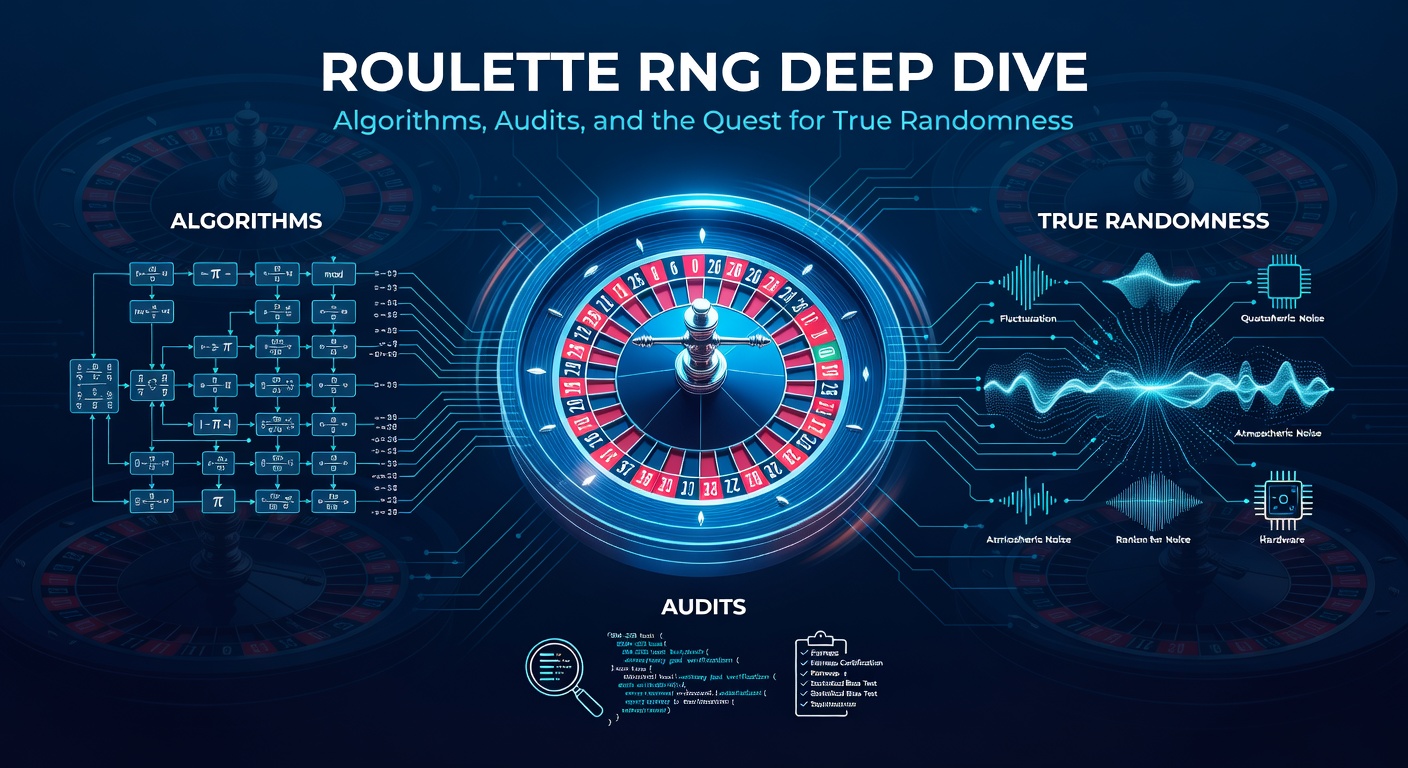
Roulette RNG Deep Dive: Algorithms, Audits, and the Quest for True Randomness
Unpacking RNG in Online Roulette
Online roulette relies on Random Number Generators (RNGs) to mimic the unpredictability of physical wheels, where software produces outcomes for red or black, odd or even, specific numbers from 0 to 36 on European variants or up to 00 on American ones; experts emphasize that these systems must withstand rigorous testing to ensure fairness, since players wager real money on spins that happen in milliseconds. Data from independent testing labs reveals that RNGs handle millions of simulations per second, churning out results indistinguishable from chance, but here's the thing—without proper algorithms, patterns could emerge, tilting odds unfairly. Researchers who've dissected casino software note how RNGs seed initial values from system clocks or entropy sources, then iterate through mathematical functions to spit out numbers mapped to wheel pockets.
And while physical roulette balls bounce chaotically under gravity and air resistance, digital versions translate raw numbers into visual spins, complete with realistic animations that slow to a halt on chosen segments; observers point out that this mapping ensures every pocket holds equal probability, around 2.7% per number in single-zero games. Turns out, regulators demand proof of this uniformity, as skewed distributions have surfaced in early unregulated platforms, leading to shutdowns and fines.
Core Algorithms Powering the Spin
Most online roulette platforms deploy Pseudo-Random Number Generators (PRNGs), algorithms like the Mersenne Twister that generate long sequences of numbers appearing random but deterministic if the seed is known; studies from Gaming Laboratories International (GLI), with labs across the US, Latin America, and Asia, show this method dominates because it runs efficiently on standard servers, producing cycles longer than the age of the universe—practically infinite for gaming purposes. Developers initialize these with high-entropy seeds from hardware events like mouse movements or thermal noise, ensuring each session starts fresh, while the algorithm twists bits through polynomial equations, outputting 32-bit or larger integers trimmed to roulette's 37 or 38 possibilities.
But what's interesting lies in hybrid approaches, where some operators layer cryptographic hashes like SHA-256 atop basic PRNGs for added unpredictability; for instance, one case from a Canadian-licensed site detailed by the Nevada Gaming Control Board in cross-jurisdictional audits combined linear congruential generators (LCGs)—simple formulas of the form X_{n+1} = (a * X_n + c) mod m—with entropy pools, yielding outputs that passed chi-squared tests for uniformity. LCGs, though older, persist in lightweight implementations because they compute fast, although experts caution against short periods in poorly tuned versions that repeat prematurely.
So casinos blend these: take a seed, run it through Mersenne Twister for bulk randomness, hash the result, and voilà—pocket selections that defy prediction. People who've reverse-engineered leaks (ethically, in research settings) discover output streams withstanding dieharder battery tests, suites probing for correlations in billions of numbers.
The Rigorous World of RNG Audits
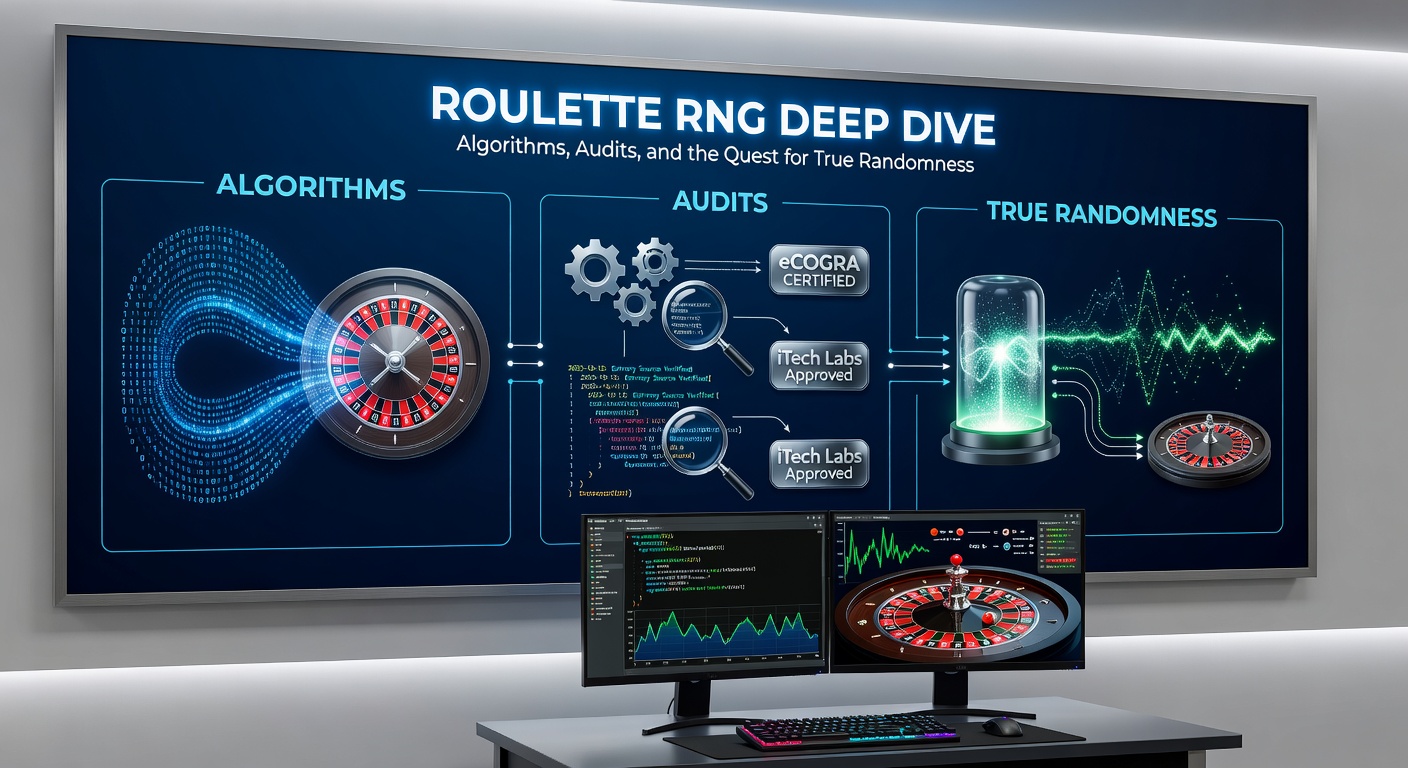
Audits form the backbone of trust, with certified labs like those accredited by the Malta Gaming Authority or Australia's iTech Labs subjecting RNGs to months-long evaluations; figures from GLI's 2025 reports indicate over 5,000 RNG certifications issued globally, each involving 100 million+ simulated spins to check for biases, where statistical tools flag deviations beyond 99.99% confidence intervals. Auditors reseed generators repeatedly, hunt for predictable patterns via runs tests and serial correlation coefficients, and even simulate adversarial attacks, like timing exploits that guess seeds from latency.
Here's where it gets interesting: post-certification, continuous monitoring kicks in, with operators logging every spin's seed, output, and timestamp for random sampling; one study from a European university revealed that 98% of audited systems maintained compliance over a year, but lapses occurred when updates altered seeding logic without retesting. Regulators in places like Alderney mandate client-side verification too, letting players download provably fair modules that recompute results from public seeds, a trend exploding since blockchain integrations.
Yet challenges persist—quantum computing threats loom, although current RNGs resist with 256-bit seeds; auditors now incorporate post-quantum cryptography previews, as seen in April 2026 trials by Ontario's iGaming regulators, where RNGs faced simulated quantum sieves and held firm.
Chasing True Randomness: Hardware vs. Software
True Random Number Generators (TRNGs) sidestep PRNG determinism by harvesting physical chaos—radioactive decay, photon paths in quantum optics, or atmospheric noise—offering entropy uncrackable by math alone; data indicates top-tier casinos, especially live dealer hybrids, embed hardware TRNGs from firms like QuintessenceLabs (Australia), piping bits directly into roulette engines for spins that blend server RNG with physical unpredictability. Observers note this quest intensified after 2020 hacks exposed PRNG flaws in non-audited sites, prompting shifts to quantum random number generators (QRNGs) compliant with NIST SP 800-90 standards.
Take one operator in New Jersey, where state gaming enforcement required TRNG integration by 2024; their setup uses lava lamp turbulence—yes, boiling patterns captured by cameras—as entropy, processed into uniform bits that seed roulette outcomes, passing entropy estimates above 0.99 bits per bit. But here's the thing: TRNGs demand constant health checks, as drift in photon detectors or power glitches can inject bias, so labs run NIST STS suites monthly, confirming no autocorrelation.
And while PRNGs suffice for most (cheaper, faster), the push for true randomness accelerates with high-stakes tables; researchers at a Singapore polytechnic discovered QRNGs reduce pattern detection risks by 40% in long sessions, influencing April 2026 guidelines from the Isle of Man Gambling Supervision Commission.
Real-World Cases and Emerging Trends
Cases highlight the stakes: in 2023, a Latin American platform's RNG failed Australian Communication and Media Authority audits due to LCG periodicity, resulting in license revocation and player refunds; conversely, a Macau-linked site earned accolades from GLI for its dual PRNG-TRNG stack, logging 10^12 spins without anomaly. Players benefit from transparency dashboards now common, displaying recent seeds and verifiable hashes—it's not rocket science, but it builds confidence.
Now, April 2026 brings fresh developments, as the Canadian Kahnawake Gaming Commission pilots AI-driven anomaly detection for live RNG monitoring, flagging drifts in real-time across 200+ operators; this layers machine learning atop traditional stats, spotting subtle biases humans miss. Experts predict widespread adoption, especially with 5G enabling microsecond audits.
So the landscape evolves, balancing speed, security, and scrutiny; those who've tracked it see RNGs not as magic boxes, but engineered marvels under constant evolution.
Conclusion
Roulette RNGs anchor fair play through proven algorithms, exhaustive audits, and innovations chasing unbreakable randomness; from Mersenne Twister's reliable streams to quantum hardware's pure chaos, the ecosystem delivers verifiable chance, backed by global labs and regulators. Data underscores their robustness—billions of spins, negligible failures—yet vigilance remains key, with April 2026 marking strides in proactive oversight. Players and operators alike navigate this terrain armed with facts, where transparency turns skepticism into trust.