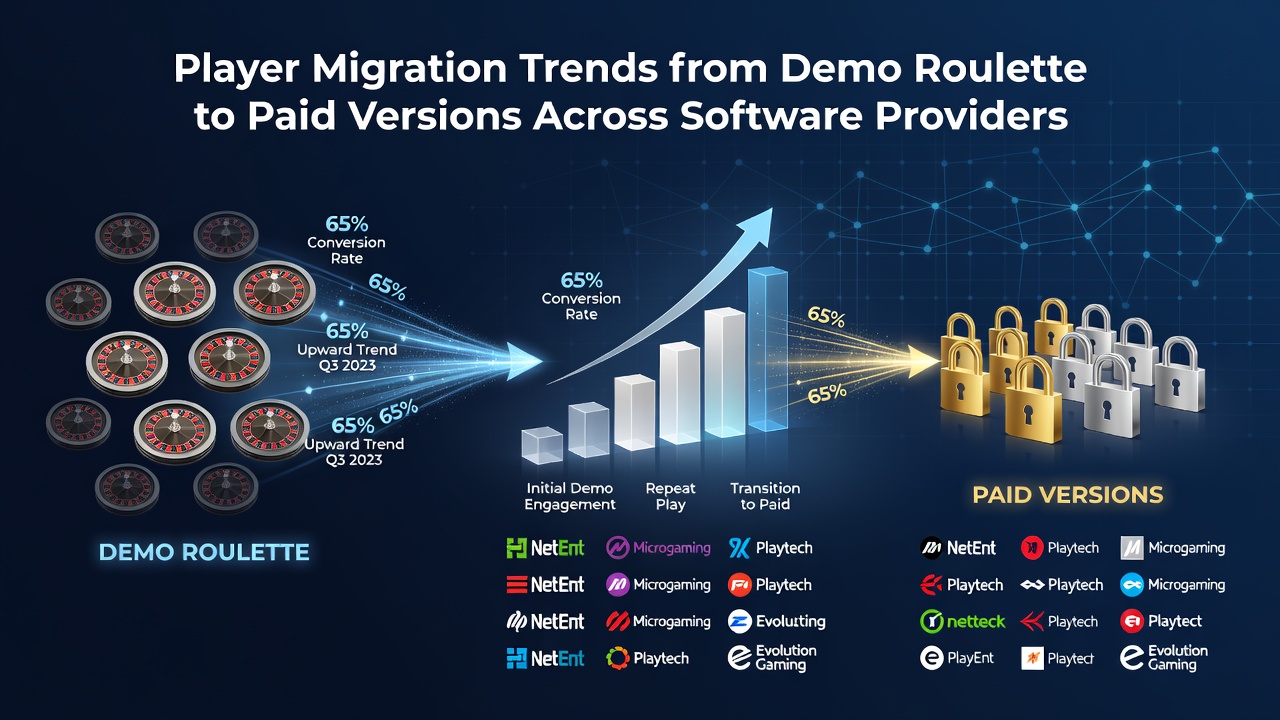
Player Migration Trends from Demo Roulette to Paid Versions Across Software Providers
Player movement from free demo roulette modes to paid versions has followed measurable patterns across leading software providers since early 2025, with data collected through July 2026 revealing distinct differences in conversion rates depending on provider architecture, game variants, and integration methods. Observers tracking these shifts note that demo environments serve as primary entry points for new users, yet the rate at which those users transition to real-money play varies significantly between companies such as Microgaming, NetEnt, Playtech, Pragmatic Play, adn Evolution Gaming.
Provider Conversion Metrics Through Mid-2026
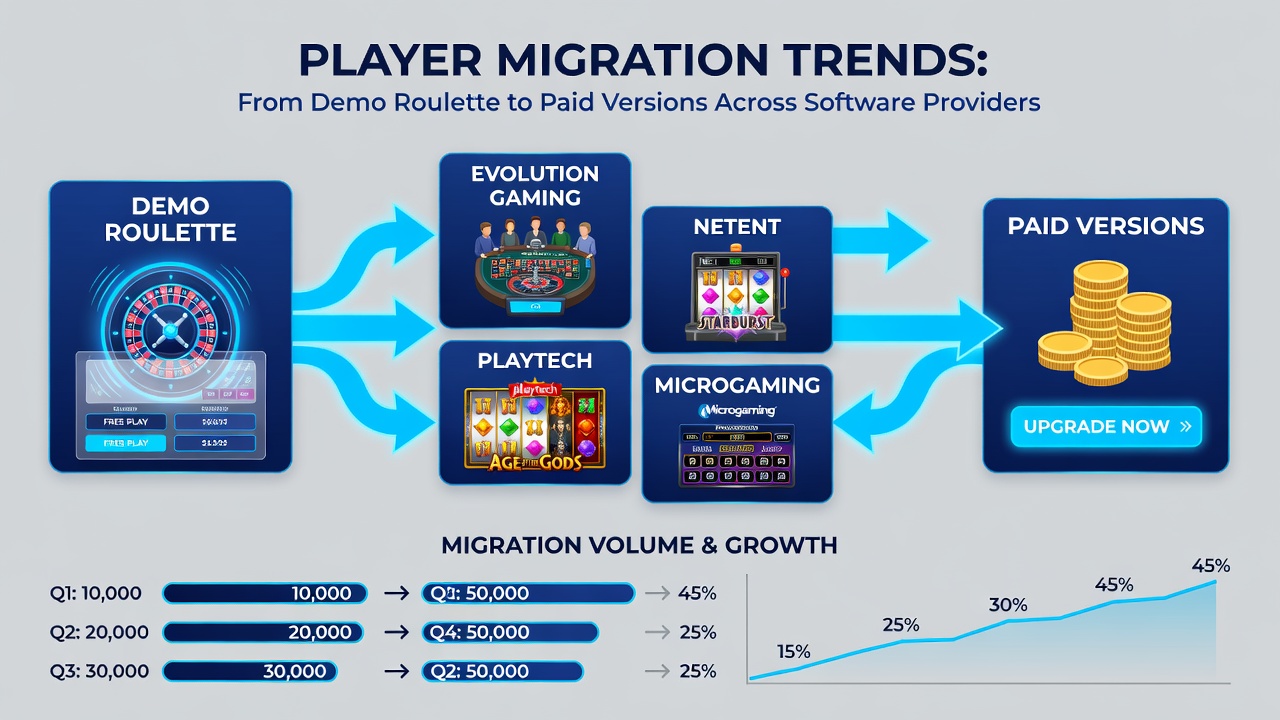
Figures compiled by platform operators show that Microgaming titles maintained an average demo-to-paid migration rate of 18 percent during the first half of 2026, while Evolution Gaming reported rates reaching 24 percent on select live roulette products. NetEnt experienced a 21 percent conversion level in the same period, whereas Pragmatic Play recorded 16 percent across its RNG-based roulette offerings. These percentages reflect aggregated data from operators using each provider’s platform, and they account for sessions initiated in demo mode that later resulted in verified deposits within 30 days.
Playtech recorded the highest migration among table-game focused studios at 26 percent for its live dealer roulette variants, a figure released in quarterly operator summaries dated June 2026. Providers attribute these differences to factors including demo session length limits, visual fidelity between free and paid modes, and the presence of progressive jackpot elements that appear only in real-money environments. Data from the Alcohol and Gaming Commission of Ontario indicates similar provider-level variances in Canadian markets, where regulatory reporting requires disclosure of demo usage versus funded account creation.
Factors Affecting Transition Rates
Software architecture plays a central role in migration outcomes. Providers that maintain identical user interfaces, betting ranges, and statistical return percentages between demo and paid versions tend to record higher transition figures. In contrast, studios that introduce artificial restrictions in demo play, such as capped bet sizes or shortened session timers, see lower movement toward deposits. July 2026 analytics from multi-operator networks further reveal that mobile demo sessions convert at rates approximately 7 percentage points below desktop sessions across all major providers.
Variant selection also influences behavior. European roulette demos, which feature a single zero, generate higher paid-version uptake than American roulette demos containing two zeros. Providers offering hybrid variants that blend RNG and live elements report intermediate conversion levels, often between 19 and 22 percent. Those who have examined account-level data note that players spending more than 45 minutes in a single demo session show elevated likelihood of subsequent real-money activity, regardless of the originating software provider.
Regional Patterns and Regulatory Context
Geographic differences appear in the data sets. Markets operating under the Australian Interactive Gambling Act display lower overall migration from demo roulette compared with European jurisdictions, with provider-specific rates averaging between 12 and 15 percent. Canadian provincial frameworks, including those administered through the Alcohol and Gaming Commission of Ontario, show steadier transitions around 20 percent for the same period ending July 2026. Operators in these regions report that bonus structures tied to first deposits accelerate movement out of demo environments, though the effect size differs by provider.
A report published by the Alcohol and Gaming Commission of Ontario in May 2026 documented that players accessing demo content from Pragmatic Play converted at lower rates than those starting with Evolution titles, a pattern consistent with global aggregates. Academic analysis from the University of Nevada’s gaming research division similarly identified interface continuity as a stronger predictor of paid-version uptake than promotional incentives alone.
Conclusion
Current records through July 2026 establish clear differentiation in how players move from demo roulette to paid versions depending on the software provider. Conversion percentages range from the mid-teens to the mid-twenties across major studios, shaped by session duration, variant type, device platform, and regulatory environment. Continued monitoring of these metrics will provide further insight into how software design decisions correlate with player progression across free and funded play modes.