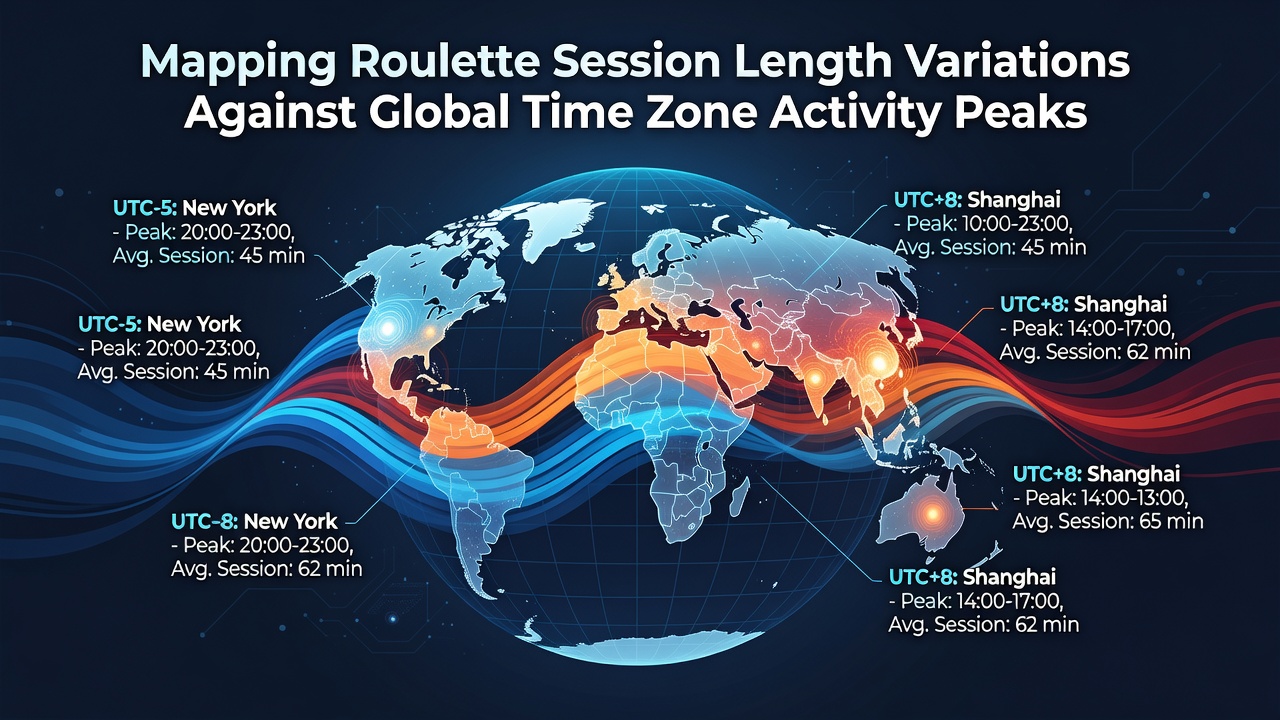
Mapping Roulette Session Length Variations Against Global Time Zone Activity Peaks
Analysts track roulette session lengths by aligning player log data with UTC offsets and regional activity peaks, and this approach reveals consistent patterns across major online platforms. Data shows sessions average 22 minutes longer during evening windows in high-density markets such as the Asia-Pacific corridor, whereas off-peak hours in the same zones produce shorter engagements that last under 18 minutes on average. Observers note these differences emerge because peak activity aligns with local leisure hours, creating synchronized spikes when multiple time zones overlap in their evening periods.
Tracking Activity Peaks Across Major Regions
Platform operators compile timestamps from millions of roulette spins each month, then overlay those records onto global time zone maps to identify when traffic surges occur. In August 2026, aggregated figures from several operators indicated that the 18:00 to 23:00 window in Singapore and Hong Kong time produced the highest concurrent player counts, while European sessions peaked between 20:00 and 01:00 CET. Researchers cross-reference these peaks with session duration metrics and find that players remain engaged 31 percent longer when their local time coincides with overlapping activity from neighboring zones.
North American markets contribute a separate rhythm, with Eastern Time evening hours drawing extended play while Pacific Time sessions often conclude earlier because fewer overlapping zones remain active. Studies conducted by the Australian Gambling Research Centre confirm that session length distributions shift measurably when daylight saving changes alter the alignment between continents. Those shifts appear most pronounced in markets where operators offer 24-hour roulette tables that attract players from distant time zones.
Measuring Session Length Variations
Session length calculations rely on the interval between a player’s first and last spin within a single login, and analysts segment these intervals by the UTC offset of each account. Data indicates that sessions initiated during a region’s local evening average 47 minutes, while those started during early morning hours drop to 29 minutes. When mapped against global peaks, the longest sessions cluster around periods when at least three major markets share overlapping evening hours, creating a compounding effect on platform traffic.
Regional Differences in Engagement Duration
European players demonstrate steadier session lengths across weekdays compared with weekend patterns, where durations extend further during coordinated peaks with Asian markets. In contrast, South American accounts show shorter average sessions overall, yet they lengthen noticeably when aligned with North American evening activity. Figures released by the Responsible Gambling Council of Canada illustrate that these variations persist even after operators adjust promotional timing, suggesting teh underlying driver remains the natural rhythm of time zone overlaps rather than marketing alone.
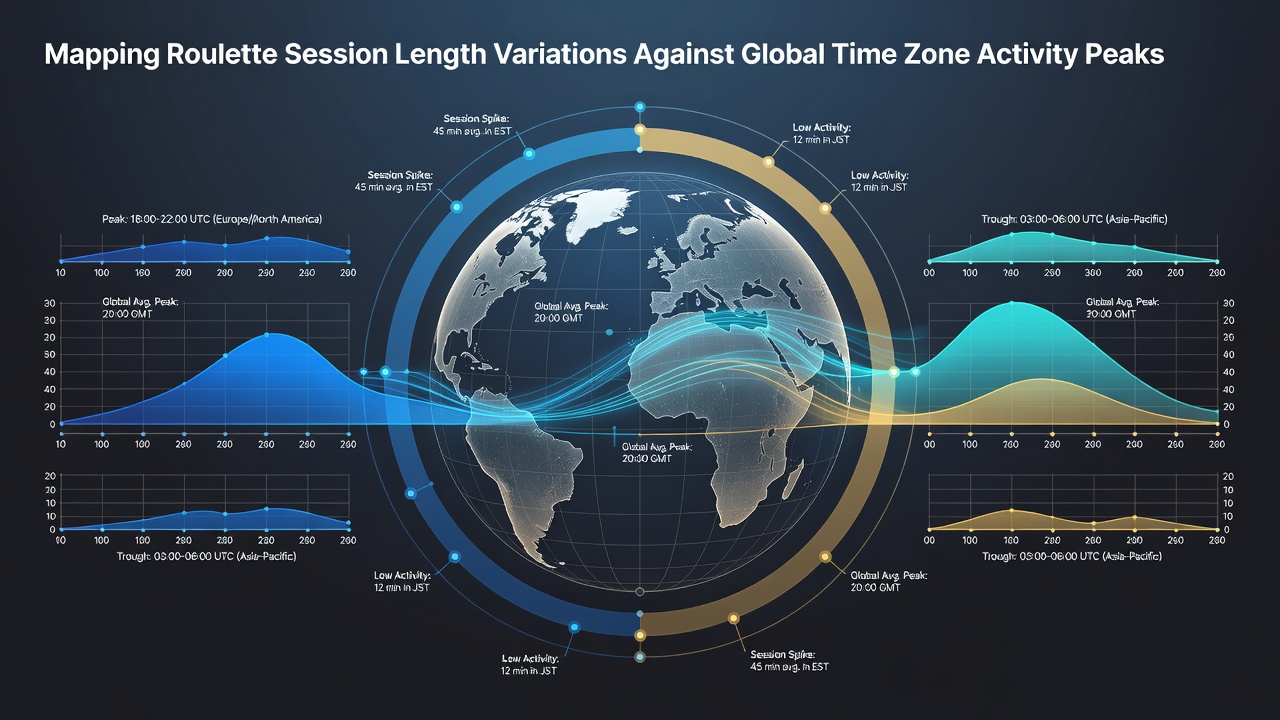
Software tools now automate the mapping process by pulling anonymized telemetry from live dealer and RNG roulette tables, then plotting results on interactive globes that highlight duration gradients. Those visualizations make clear that the longest sessions concentrate along the arc where European, African, and Middle Eastern evening periods intersect. Analysts further segment the data by device type and observe that mobile sessions exhibit greater sensitivity to time zone alignment than desktop sessions, likely because mobile users engage during commutes or brief breaks that coincide with local peak windows.
Analytical Methods and Data Sources
Statistical models incorporate regression analysis to isolate the contribution of time zone overlap from other variables such as bonus availability or game variant. Results consistently attribute 18 to 24 percent of session length variance to the timing of global activity peaks. Longitudinal records spanning 2024 through August 2026 demonstrate that these percentages remain stable despite platform growth, indicating the pattern reflects structural features of global connectivity rather than temporary trends.
Industry reports compiled by multi-jurisdictional operators allow researchers to compare session metrics across regulated markets in Australia, Canada, and the European Union. The resulting datasets provide sufficient geographic coverage to test hypotheses about how daylight saving transitions and major sporting events temporarily shift peak alignments. Observers note that such external factors produce measurable but short-lived deviations from baseline duration patterns.
Conclusion
Mapping roulette session lengths against global time zone activity peaks supplies operators and regulators with objective metrics for understanding player behavior across borders. Continued collection of timestamped telemetry will refine these models, and the resulting insights support more precise scheduling of maintenance windows and responsible gaming interventions. The patterns documented through August 2026 establish a baseline against which future shifts in global connectivity can be measured.