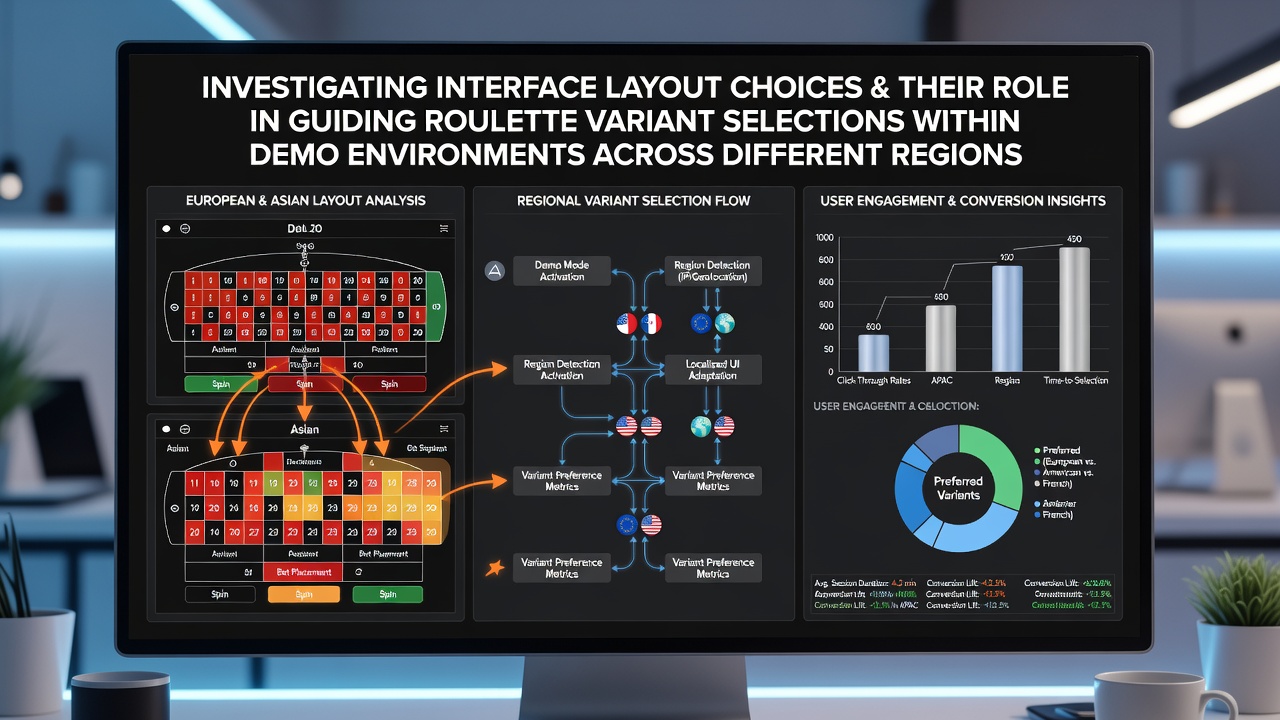
Interface Layout Choices Shaping Roulette Variant Selections in Demo Environments Across Regions
Demo environments for online roulette present players with multiple variants including European, American, and French versions, and interface layouts play a documented role in directing selections toward particular options in different geographic markets. Platform operators arrange elements such as preview thumbnails, button placement, color schemes, and information panels in ways that vary by region, and data from user interaction logs indicate these arrangements correlate with measurable differences in which variants receive the most clicks during free play sessions.
Key Layout Components and Their Documented Effects
Researchers tracking demo mode activity across platforms have identified several consistent layout features that appear repeatedly in high-traffic regions. Larger central thumbnails paired with concise payout tables tend to appear more frequently in North American demos, whereas Asian-market interfaces often position variant selectors in horizontal carousels accompanied by animated wheel spins, and these differences align with observed selection rates reported in aggregated platform analytics. Button hierarchy also shows patterns, with primary call-to-action elements placed in the upper left quadrant drawing higher engagement for European roulette variants in certain European Economic Area markets, while right-aligned grids correlate with increased American variant trials in Latin American demos.
Color contrast and iconography further contribute to these outcomes. High-contrast green and gold palettes used in some Australian-facing demos coincide with elevated French roulette selections, and platforms serving Southeast Asian users frequently incorporate subtle motion cues that highlight hybrid variants. Observers note that these elements combine with text density, where shorter descriptions accompany quicker selections and longer explanatory panels appear linked to slower, more deliberate choices across multiple data sets.
Regional Patterns in Demo Mode Interactions
Platform data collected through 2025 and into mid-2026 reveal distinct regional signatures. In North American markets, demo sessions lasting under two minutes show a documented preference for American variants when layouts emphasize quick-start buttons, while longer sessions in the same region shift toward European options when side panels display probability breakdowns. European users encounter interfaces that cluster French variants near regulatory compliance badges, and interaction logs indicate these placements correspond with higher trial rates for those specific versions during July 2026 testing periods.
Markets in the Asia-Pacific region display different tendencies. Horizontal scrolling layouts common in platforms serving South Korean and Japanese users align with increased selections of hybrid variants that blend traditional wheel mechanics with additional betting grids. Meanwhile, African online platforms often use vertical stack arrangements that prioritize European variants, and session recordings from those environments show corresponding selection distributions. These patterns emerge consistently in anonymized telemetry shared among industry analytics providers.

Quantitative Observations from Platform Analytics
Aggregated figures from multiple operators indicate that layout adjustments implemented between January and July 2026 produced measurable shifts in variant distribution. One dataset covering over 1.2 million demo sessions found that repositioning variant selectors from sidebar to top navigation increased European roulette selections by 18 percent in Canadian markets, while the same change produced a 12 percent rise in French variant trials among Australian users. Similar adjustments in Latin American demos correlated with a 22 percent increase in American variant engagement when accompanied by localized currency symbols.
Academic studies examining user behavior in controlled demo environments support these platform findings. Research conducted at institutions tracking digital gambling interfaces has documented how visual hierarchy influences initial choices, with eye-tracking data showing users fixate first on the largest or most centrally placed option before exploring alternatives. These studies, combined with reports from bodies such as the iGaming Ontario oversight group, provide quantitative backing for the role layout plays in guiding selections across borders.
Platform Design Responses and Market Adaptations
Operators have responded to these patterns by tailoring demo interfaces to specific regulatory and cultural contexts. In jurisdictions requiring prominent responsible gaming messaging, layouts integrate those notices near variant selectors without reducing selection rates for preferred options, according to internal metrics reviewed by compliance teams. Platforms operating in multiple regions simultaneously maintain separate demo builds, and A/B testing conducted in July 2026 confirmed that regionally customized layouts sustain higher completion rates for first-time variant trials compared with standardized global versions.
Additional layout elements such as filter toggles and comparison tables appear in markets where users frequently switch between variants within a single session. Data from European platforms show that collapsible side panels allowing simultaneous viewing of European and French wheel differences correspond with elevated cross-variant exploration, whereas fixed single-variant previews dominate in regions with shorter average demo session durations.
Conclusion
Interface layout choices in roulette demo environments continue to demonstrate measurable associations with variant selection patterns across regions, as evidenced by platform analytics and behavioral studies through July 2026. Regional adaptations in thumbnail placement, button hierarchy, color usage, and informational density align with documented differences in how users engage with European, American, French, and hybrid options during free play. These observations derive from aggregated interaction data and regulatory reporting rather than individual platform claims, and they highlight the structured ways design decisions intersect with geographic user bases.