
How Regional Player Habits Shape Roulette Variant Selections in Emerging Digital Markets Outside Traditional Hubs
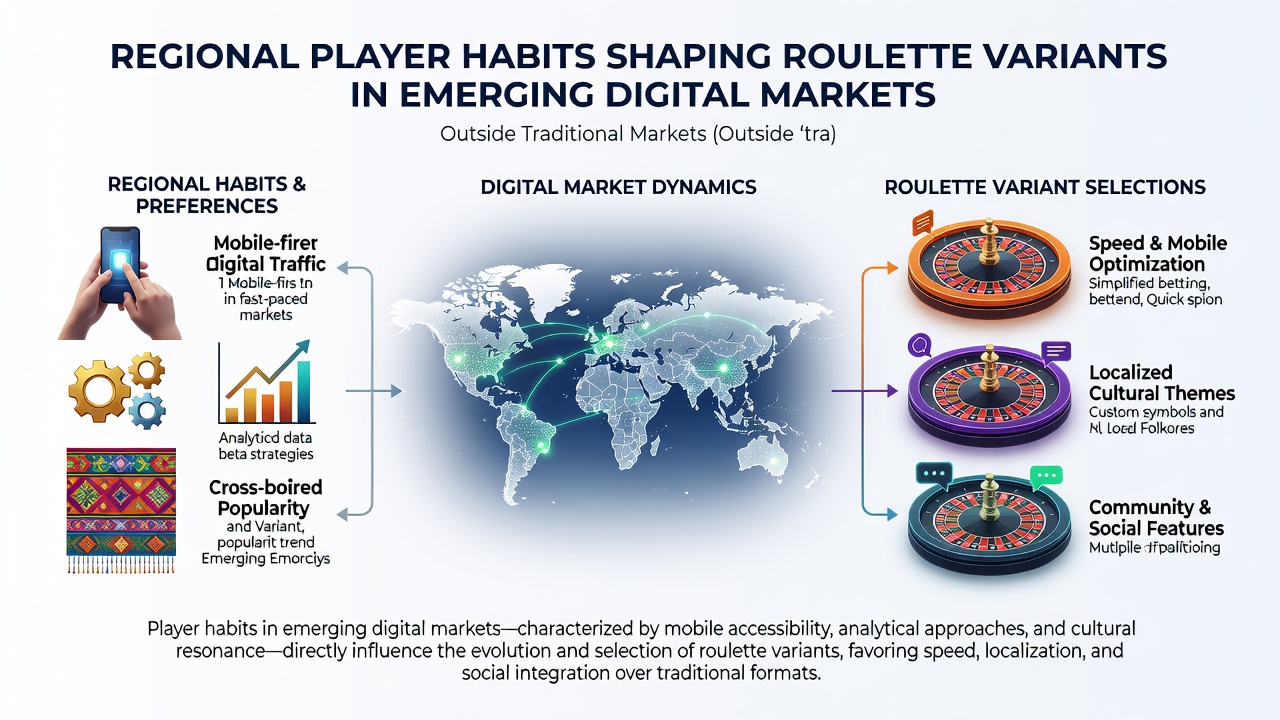
Regional player habits continue to influence roulette variant selections across emerging digital markets in Latin America, Southeast Asia, and parts of Africa, where local preferences intersect with platform availability and payment systems, and data from July 2026 market reports shows continued divergence from offerings in established hubs like Las Vegas and Macau. Observers note that mobile penetration rates above 80 percent in several of these areas drive selections toward streamlined formats that load quickly on lower-bandwidth connections while integrating with regional e-wallets and cryptocurrencies.
Latin American Patterns and Mobile-Driven Choices
Players in Brazil, Colombia, and Argentina often favor variants such as mini roulette and speed roulette, which reduce spin cycles and table limits to match shorter session times common on smartphones during commutes or breaks. Research indicates that these selections align with habits formed around instant-win games popular in local lotteries and sports betting apps, while European roulette wheels appear more frequently than American versions because the single-zero layout appeals to cost-conscious users tracking smaller bankrolls. Platforms respond by prioritizing these options in localized app stores, and figures reveal that demo mode usage spikes for these variants before real-money transitions occur through integrated payment gateways.
Adaptations in Southeast Asian Markets
Turnout in Indonesia, Vietnam, and Thailand shows stronger engagement with European and French roulette variants that include la partage and en prison rules, which extend playtime and reduce house edge in ways that echo cultural approaches to risk management seen in traditional card games. Data shows that number selection patterns cluster around lucky digits tied to local numerology, prompting providers to highlight customizable betting interfaces that accommodate these tendencies without altering core mechanics. External factors such as regulatory approvals for RNG-certified games further shape availability, and as of July 2026 several operators reported increased retention when side-bet options tied to progressive jackpots were added to these base variants.
African Market Influences on RNG and Stakes
Users across Nigeria, Kenya, and South Africa gravitate toward RNG-driven roulette variants that support micro-stakes starting below the equivalent of one US dollar, a pattern tied to widespread mobile money adoption through services like M-Pesa and similar systems. Studies found that these players select American wheel formats at higher rates when progressive jackpot mechanics are attached, since the double-zero layout increases volatility in ways that complement jackpot-chasing behavior observed in other casino categories. According to reports from the Australian Gambling Research Centre, payment friction reduction correlates directly with variant retention rates in comparable low-income digital segments. Observers note that hybrid live-RNG options gain traction where internet stability varies, allowing seamless switches between formats during peak usage hours.
Eastern European and Broader Trend Integration
Markets in Poland, Romania, and Ukraine demonstrate preferences for strategy-focused variants such as multi-wheel roulette, where simultaneous spins support complex betting systems developed around historical European wheel biases documented in older literature. These choices reflect longer average session durations recorded in regional analytics, and providers adjust by embedding statistical tracking tools that appeal to analytical player bases without requiring external software. What's interesting is how cross-border tournament features, introduced in early 2026, further boosted selections of these multi-outcome formats in markets where competitive play habits already existed from poker and esports communities.
Platform Responses and Regulatory Contexts
Operators tailor variant libraries through geo-specific algorithms that analyze session data, deposit patterns, and time-of-day activity to surface preferred options first in user interfaces. Evidence suggests that compliance with local licensing bodies, including those in Latin America and Southeast Asia, requires explicit RNG audits that indirectly favor certain wheel configurations over others based on certification ease. Canadian regulatory summaries on international market comparisons highlight similar data-driven curation practices that have migrated to emerging regions. Those who've studied these platforms know that A/B testing cycles now run continuously, with results feeding back into variant prioritization within weeks rather than months.
Conclusion
Regional habits continue to steer roulette variant selections in these digital markets through combinations of device usage, cultural number preferences, payment integration, and session length tendencies, producing measurable differences from traditional hub offerings. As July 2026 data continues to accumulate, platforms maintain adaptation cycles that align available variants with documented player behaviors while meeting evolving regulatory standards across jurisdictions.