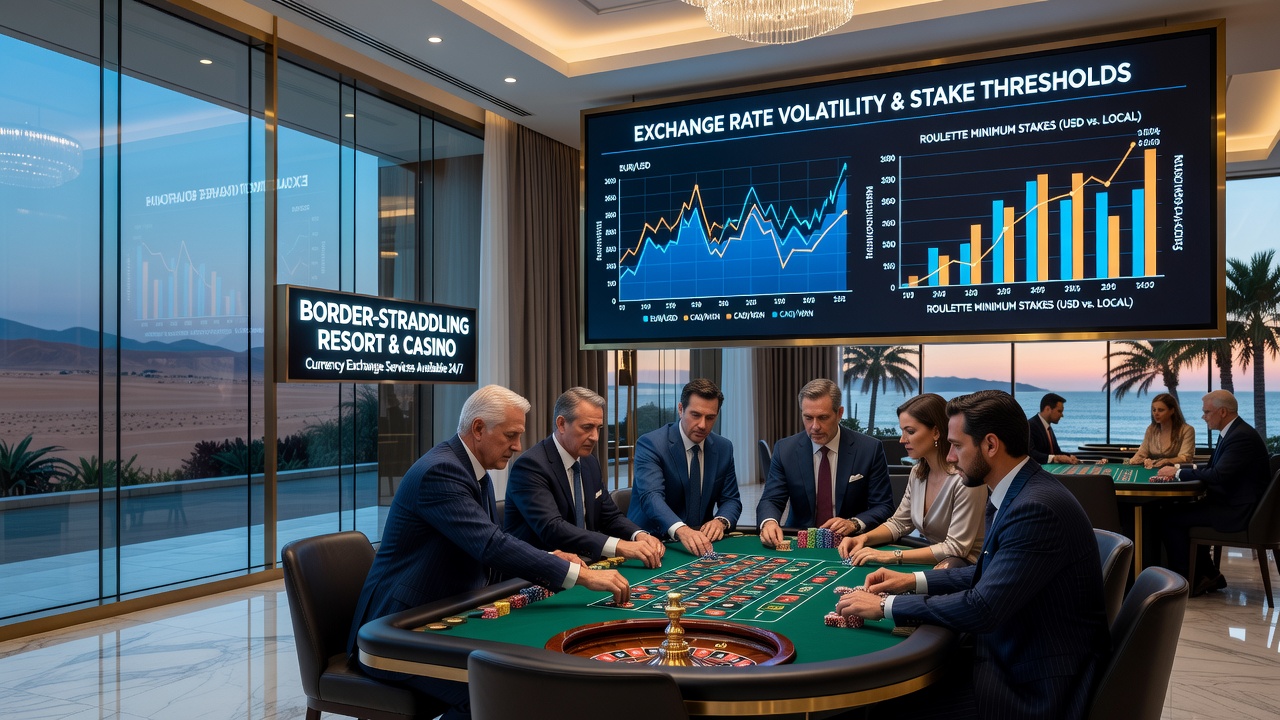
How Currency Exchange Rate Volatility Shapes Roulette Stake Thresholds in Border-Straddling Resort Properties
Border-straddling resort properties sit at the intersection of national currencies, and this positioning means roulette stake thresholds respond directly to exchange rate movements between those currencies. Properties along the US-Canada border, for instance, maintain tables where minimum and maximum bets must accommodate both USD and CAD players simultaneously. When the exchange rate between these currencies shifts by more than a few percentage points, operators recalibrate those thresholds to preserve table economics and regulatory compliance.
Data from central banks shows the USD/CAD pair experienced multiple swings exceeding 4 percent during the first half of 2026, with particular movement recorded in July and August. Such volatility forces casino finance teams to review stake parameters on a weekly rather than monthly basis. Researchers tracking gaming operations note that properties adjust roulette minimums upward when the local currency weakens, because the real value of each chip changes relative to the other currency.
Mechanics of Stake Threshold Adjustments
Casino management teams monitor live exchange feeds and apply formulas that convert base USD limits into equivalent CAD amounts, then round to the nearest chip denomination available on the floor. A minimum bet posted at $10 USD might appear as 14 CAD when the rate sits near 1.38, yet the same table might post 13 CAD when the rate moves to 1.32. These recalibrations occur because regulators require posted limits to reflect actual economic value rather than nominal figures. Observers at border properties report that such changes usually take effect within 48 hours of a sustained rate movement.
Dealers receive updated floor sheets that list both currencies side by side, while electronic displays switch automatically once the system receives the revised rate. This process keeps the house edge consistent across player groups even as purchasing power fluctuates. Studies of table performance indicate that unadjusted limits lead to disproportionate play from one currency group, which in turn affects hold percentages and variance calculations used for staffing decisions.
Player Behavior and Cross-Border Flows
Players living on one side of the border often track exchange rates before deciding which property to visit. When the CAD strengthens against the USD, Canadian visitors find American-side minimums more attractive and shift their play accordingly. Conversely, a weakening CAD prompts those same players to stay on their domestic side until thresholds realign. Data collected by regional tourism boards shows measurable spikes in cross-border visits within 72 hours of favorable rate shifts.
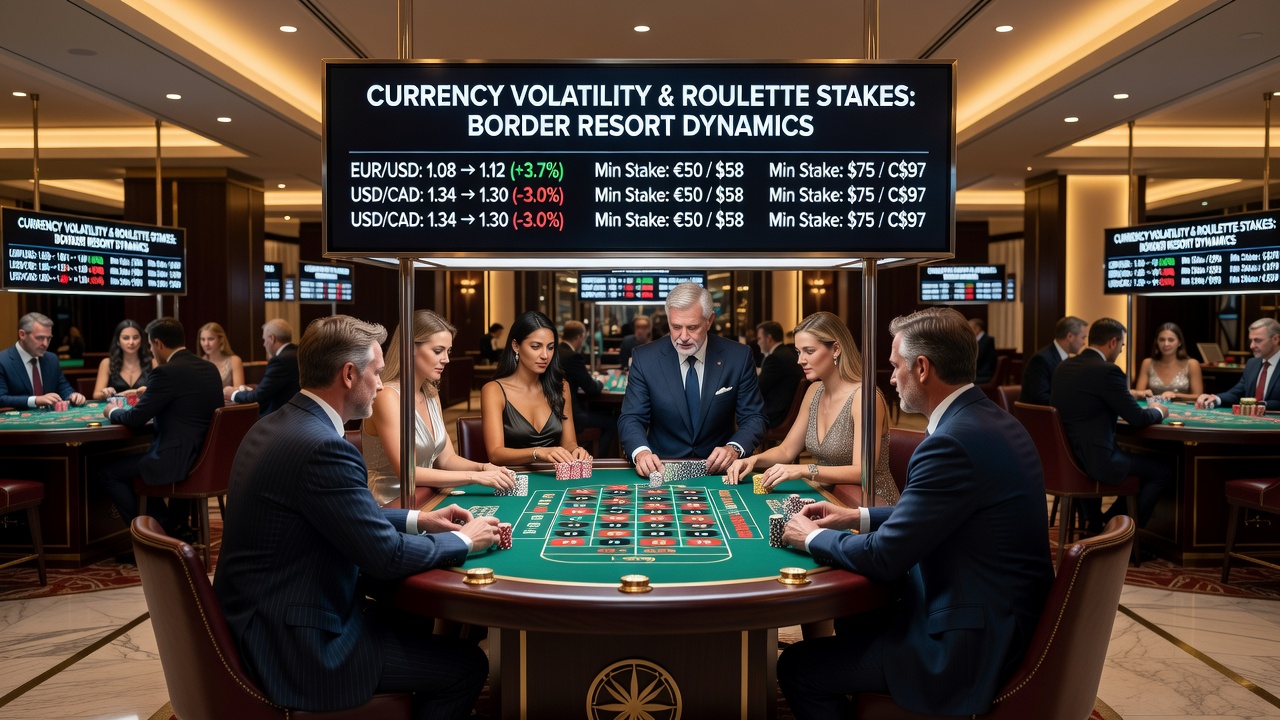
High-volume players sometimes request temporary credit lines denominated in their home currency to avoid repeated conversions during a session. Properties accommodate these requests by embedding exchange buffers into the credit terms, which effectively widens the spread on larger bets. According to records from the Bank of Canada, average daily volatility in August 2026 reached levels last seen during the 2022 rate-hike cycle, prompting several Niagara properties to issue revised stake sheets twice in a single week.
Regulatory and Operational Considerations
Gaming control boards on both sides of the border require operators to maintain transparent conversion methodologies and to post the prevailing rate used for any given shift. Compliance audits examine whether posted limits remained within approved bands relative to recorded exchange data. Operators that fail to update thresholds promptly risk fines or temporary suspension of table games until corrections are verified.
Internal risk models incorporate exchange-rate volatility as a variable alongside traditional factors such as table occupancy and average bet size. These models help determine whether a property should widen spreads between minimum and maximum bets to absorb potential swings without frequent re-posting. Industry reports compiled by the American Gaming Association document that border properties allocate additional staff hours to rate monitoring compared with inland casinos, because even modest movements can alter the attractiveness of entire bank of tables.
Conclusion
Currency exchange rate volatility directly influences how border-straddling resort properties set and maintain roulette stake thresholds, because operators must balance regulatory requirements, player economics, and table performance across two currencies. Weekly recalibrations, dual-currency postings, and credit-line adjustments represent standard responses to rate movements documented throughout 2026. As exchange data continues to show periodic swings, these properties maintain systems that translate rate changes into posted limits within short operational windows.