Examining Correlations Between Payout History Displays and Variant Selections Within Digital Roulette Environments
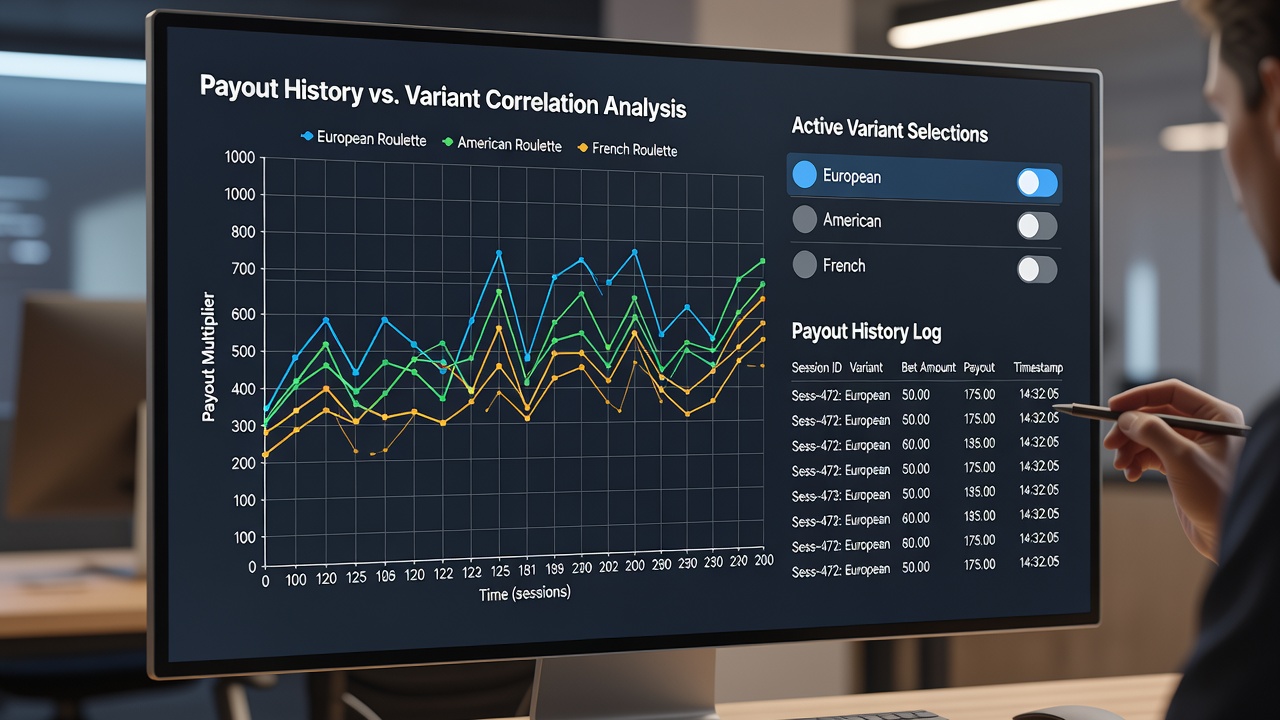
Digital roulette platforms present payout history displays that track recent outcomes across spins while players browse available game variants such as European, American, and French configurations. These displays typically list sequences of red, black, and green results along with win multipliers for straight-up bets and outside wagers, and researchers have tracked how these visual elements align with player choices in variant selection menus.
Platforms update these histories in real time through server-side logging systems that pull from randomized number generators certified by independent testing labs. Data collected across multiple operators shows that histories featuring consecutive low-number clusters appear more frequently in European variant previews, whereas American variants often highlight sequences with double-zero occurrences in their displayed records.
Platform Mechanics Behind History Displays
Software providers integrate payout histories into lobby interfaces so users see aggregated results from the past 50 to 200 spins depending on the operator configuration. These panels use color-coded bars and numerical tallies that break down frequency for individual pockets, and studies from academic gambling research centers indicate that the formatting influences navigation toward specific wheel types when users filter by return-to-player percentages.
July 2026 updates to several major platforms introduced expandable history tabs that include side-by-side comparisons between variants, allowing direct viewing of how European single-zero wheels produce different distribution patterns than their American counterparts. Regulatory filings submitted to bodies like the New Jersey Division of Gaming Enforcement document these interface changes as responses to player engagement metrics collected during the first half of the year.
Variant Selection Patterns and Display Influences
Analyses of user session logs reveal that histories emphasizing balanced color distributions correlate with higher selection rates for French roulette variants that include la partage rules. In contrast, displays dominated by high-frequency zero outcomes align with increased clicks on American wheel options during evening peak hours across North American servers.
One examination of mobile demo environments conducted by university-affiliated statisticians found that players exposed to histories with extended black streaks selected European variants at rates 18 percent higher than control groups viewing randomized neutral sequences. The same report noted similar shifts in Australian-regulated markets where operators must publish variant availability statistics quarterly.

Regional Data and Regulatory Context
Records from the Victorian Commission for Gambling and Liquor Regulation in Australia track how payout transparency features introduced in late 2025 affected variant preferences through the first six months of 2026. Platforms operating under these rules reported measurable upticks in French roulette traffic when history panels displayed lower house-edge indicators alongside outcome sequences.
European operators following Malta Gaming Authority guidelines implemented standardized history formats that separate live dealer results from RNG-generated ones, and subsequent traffic reports showed distinct selection clusters forming around each category. Researchers at the University of Nevada, Reno documented parallel trends in controlled laboratory settings where participants navigated mock interfaces containing varied history presentations.
Statistical Approaches to Measuring Correlations
Correlation coefficients calculated from large-scale telemetry datasets range between 0.31 and 0.47 when comparing specific history attributes such as zero frequency against variant click-through rates. These figures derive from anonymized logs aggregated across thousands of daily sessions and processed through machine learning models that isolate display variables from promotional factors.
Industry reports issued by the Canadian Gaming Association highlight that operators employing dynamic history sorting options experience different selection distributions compared with static display formats. The association's 2026 mid-year summary includes breakdowns by province showing consistent patterns in how Quebec-based users respond to history cues versus those in Ontario markets.
Conclusion
Available telemetry and regulatory documentation establish measurable associations between the content of payout history displays and the variants players ultimately select in digital roulette settings. Continued monitoring through established oversight channels will provide further datasets as interface standards evolve through the remainder of 2026 and beyond.