
Demographic Shifts in Online Roulette Audiences Spur Custom Interface Designs from Major Providers
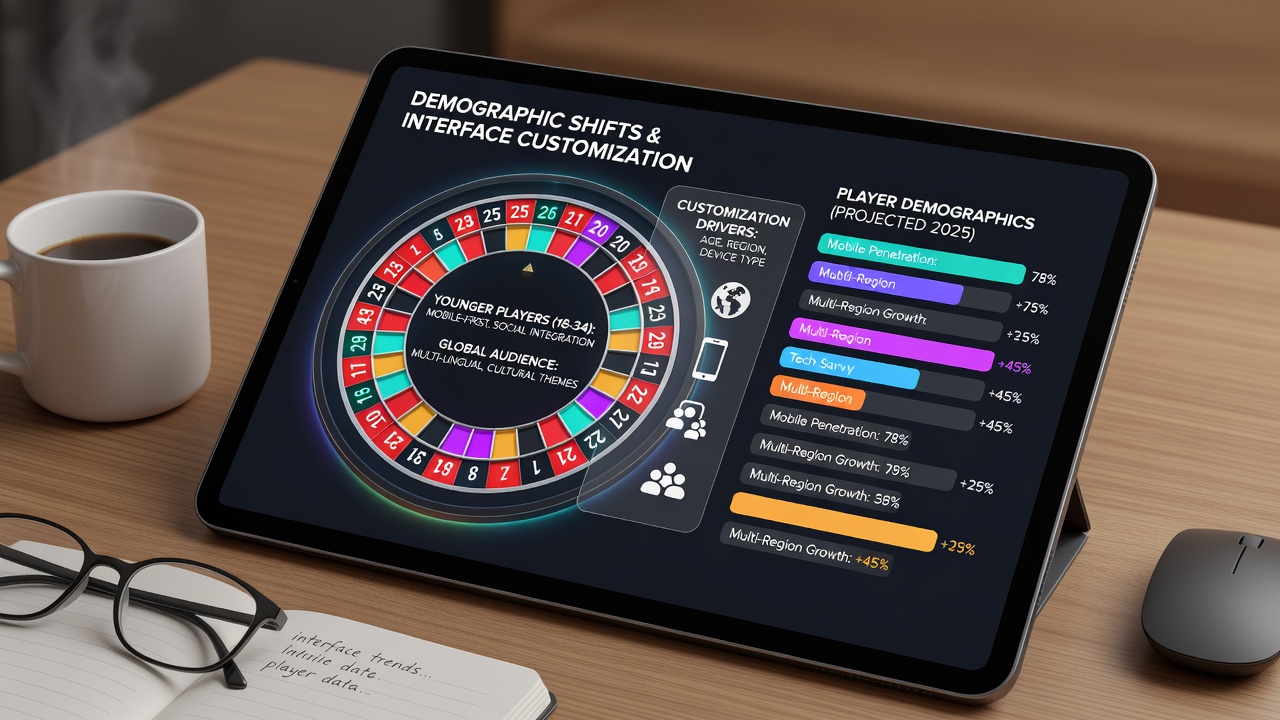
Data from multiple industry analyses shows that age distributions among online roulette participants have changed noticeably since 2023, with players aged 18 to 34 now comprising over 55 percent of active sessions according to aggregated platform metrics. Software providers respond by adjusting color palettes, button placements, and navigation flows to match these groups, while retaining options that appeal to older cohorts who still account for substantial playtime volumes. Major developers such as Evolution Gaming and Playtech have released modular interface toolkits that allow operators to toggle between minimalist and detailed views based on user profiles detected at login.
Geographic data collected through licensing reports from iGaming Ontario and the Australian Communications and Media Authority reveals rising participation from Southeast Asian and Latin American markets, prompting providers to incorporate localized number formatting, currency symbols, and culturally familiar iconography into roulette tables. These adjustments appear in both downloadable clients and browser-based versions, where font sizes and contrast ratios receive separate optimization passes for readability across different alphabets and scripts.
Age-Based Interface Adjustments
Younger participants frequently access games via smartphones during short sessions, so developers have increased the size of betting chips and streamlined the bet confirmation sequence to reduce taps required per round. In contrast, sessions logged by users over 45 show higher completion rates when interfaces retain traditional wheel animations and offer persistent statistics panels that track dozens of previous outcomes without additional menu navigation. Providers track these patterns through anonymized telemetry and deploy A/B testing frameworks that update layouts automatically for new registrants while preserving legacy settings for returning accounts.
Device and Session Length Patterns
Mobile traffic now exceeds 70 percent of total roulette volume at several large European operators, according to figures shared by the European Gaming and Betting Association in mid-2026. This shift drives the addition of swipe gestures for chip selection and collapsible side panels that free screen space during live dealer streams. Desktop users, who tend toward longer sessions exceeding 30 minutes, receive expanded multi-bet grids and keyboard shortcuts that accelerate repeated wagers on the same numbers or sectors.
Research from academic groups studying digital gambling behavior indicates that players from regions with high mobile penetration prefer interfaces that load in under two seconds and default to auto-adjusting stake levels based on recent activity. Major providers integrate these preferences into their content management systems, allowing casino operators to pre-select themes that align with traffic sources rather than requiring manual customization on every deployment.
Regional Customization Trends
Operators serving audiences in emerging African markets have requested wheel variants that display both European and American layouts side by side, along with tutorial overlays in local languages that appear only on first play. Similar requests from North American platforms focus on integration with loyalty dashboards that surface progressive jackpot meters without disrupting the core betting area. These modifications roll out through standardized SDK updates released quarterly, giving smaller operators access to the same demographic tools used by larger groups.
August 2026 platform audits show increased deployment of high-contrast modes and reduced animation settings, features originally developed for accessibility compliance but now applied broadly to accommodate older player segments who report lower tolerance for rapid visual changes. Providers document these rollouts through release notes that detail the specific demographic datasets used to prioritize each change.
Provider Implementation Examples
NetEnt introduced a profile-based theme engine in early 2025 that lets operators map player age brackets and device types to distinct roulette skins, complete with adjustable chip denominations and history display depths. Playtech followed with a comparable system that emphasizes regional currency formatting and cultural color associations, while Evolution expanded its live dealer studios to include background variations selected according to peak traffic times from different time zones. These tools operate on aggregated, anonymized data rather than individual tracking, maintaining compliance with data protection rules across jurisdictions.
Telemetry shared among members of the International Association of Gaming Regulators shows consistent correlations between interface adjustments and session duration increases in targeted demographics, though exact uplift percentages vary by operator and market. Providers continue refining detection algorithms that infer preferred layouts from initial clicks and session length without requiring explicit user input.
Conclusion
Demographic monitoring now forms a core component of roulette product roadmaps at every major software house. Interface elements once treated as fixed design choices have become configurable parameters updated in response to shifting player bases. Continued collection of session data across age groups, regions, and devices will likely sustain this cycle of incremental customizations through the remainder of 2026 and beyond.